




From Fabric Manufacturing to Printing, Embroidery, and Designing: The Complete Journey of Textile Creation
By : Administrator Dated : 28-June-2026
The textile industry is one of the most creative and fast-growing industries in the world. From the production of raw fabric to beautiful printed designs and detailed embroidery work, every stage requires skill, technology, and creativity. Today, fashion brands, garment manufacturers, and textile companies focus not only on quality but also on innovative designs and customization.
In this blog, we will explore the complete journey of textile creation — from fabric manufacturing to printing, embroidery, and designing.
1. Fabric Manufacturing – The Foundation of Fashion
Fabric manufacturing is the first and most important step in the textile industry. High-quality fabric ensures durability, comfort, and a premium finish in garments.
Types of Fabric Manufacturing
Weaving
Weaving is the process of interlacing two sets of yarns to create fabric. It is commonly used for:
- Cotton fabrics
- Denim.
- Silk materials
- Polyester blends
Knitting
Knitting creates flexible and stretchable fabrics used in:
- T-shirts
- Sportswear.
- Winter garments
- Hosiery products
Non-Woven Fabric
These fabrics are manufactured without weaving or knitting and are widely used in:
- Medical textiles
- Bags
- Industrial products
2. Textile Printing – Adding Life to Fabric
Printing transforms plain fabric into attractive and fashionable material. Modern textile printing technologies allow businesses to create unique and customized patterns.
Popular Fabric Printing Methods
Screen Printing
One of the oldest and most popular methods for bulk printing. Suitable for:
- T-shirts
- Promotional garments
- Uniforms
Digital Printing
Digital textile printing offers:
- High-quality designs
- Fast production
- Multi-color printing
- Custom designs with low setup cost
Sublimation Printing
Widely used for polyester fabrics and sportswear because of:
- Vibrant colors
- Long-lasting prints
- Smooth finishing
Block Printing
3. Embroidery – The Art of Elegant Detailing
Embroidery adds premium value and elegance to garments. It involves decorating fabric using thread patterns and stitching techniques.
Types of Embroidery
Hand Embroidery Traditional embroidery done manually for:
- Designer wear
- Bridal collections
- Luxury fashion
Machine Embroidery : Modern computerized embroidery machines provide:
- Fast production
- Accurate designs
- Large-scale manufacturing
- Logo embroidery for uniforms and branding
Popular Embroidery Styles
- Zari Work
- Thread Work
- Sequin Embroidery
- Applique Work
- Mirror Work
Embroidery is commonly used in:
- Fashion garments
- School uniforms
- Corporate apparel
- Home furnishing products
4. Textile Designing – Creativity Meets Technology
Textile designing is where creativity comes alive. Designers create patterns, textures, color combinations, and artwork for fabrics and garments.
Role of Textile Designers Textile designers work on:
- Fashion trends
- Fabric patterns
- Digital artwork
- Color selection
- Print layouts
Modern Designing Tools Today, designers use advanced software like:
- Adobe Illustrator
- Photoshop
- CorelDRAW
- CAD Textile Designing Software
Importance of Textile Designing Creative textile designing helps brands:
- Build unique identity
- Attract customers
- Stay competitive in fashion markets
- Launch seasonal collections
5. Technology in the Textile Industry
Modern technology has transformed the textile sector completely.
Latest Innovations
- AI-based fabric inspection
- Automated embroidery machines
- Digital textile printing
- Sustainable fabric manufacturing
- Smart textile solutions
These technologies improve:
- Production speed
- Quality control
- Customization options
- Cost efficiency
6. Growing Demand in the Textile Industry
The global demand for customized fashion and branded apparel is increasing rapidly. Industries that benefit from textile manufacturing include:
- Fashion brands
- School uniforms
- Sportswear companies
- Home furnishing businesses
India is becoming a major hub for textile manufacturing because of:
- Skilled workforce
- Advanced manufacturing units
- Affordable production
- Strong export market
7. Textile Design Education and Career Opportunities
The growing textile and fashion industry has increased the demand for skilled textile designers, embroidery experts, printing specialists, and garment technologists.
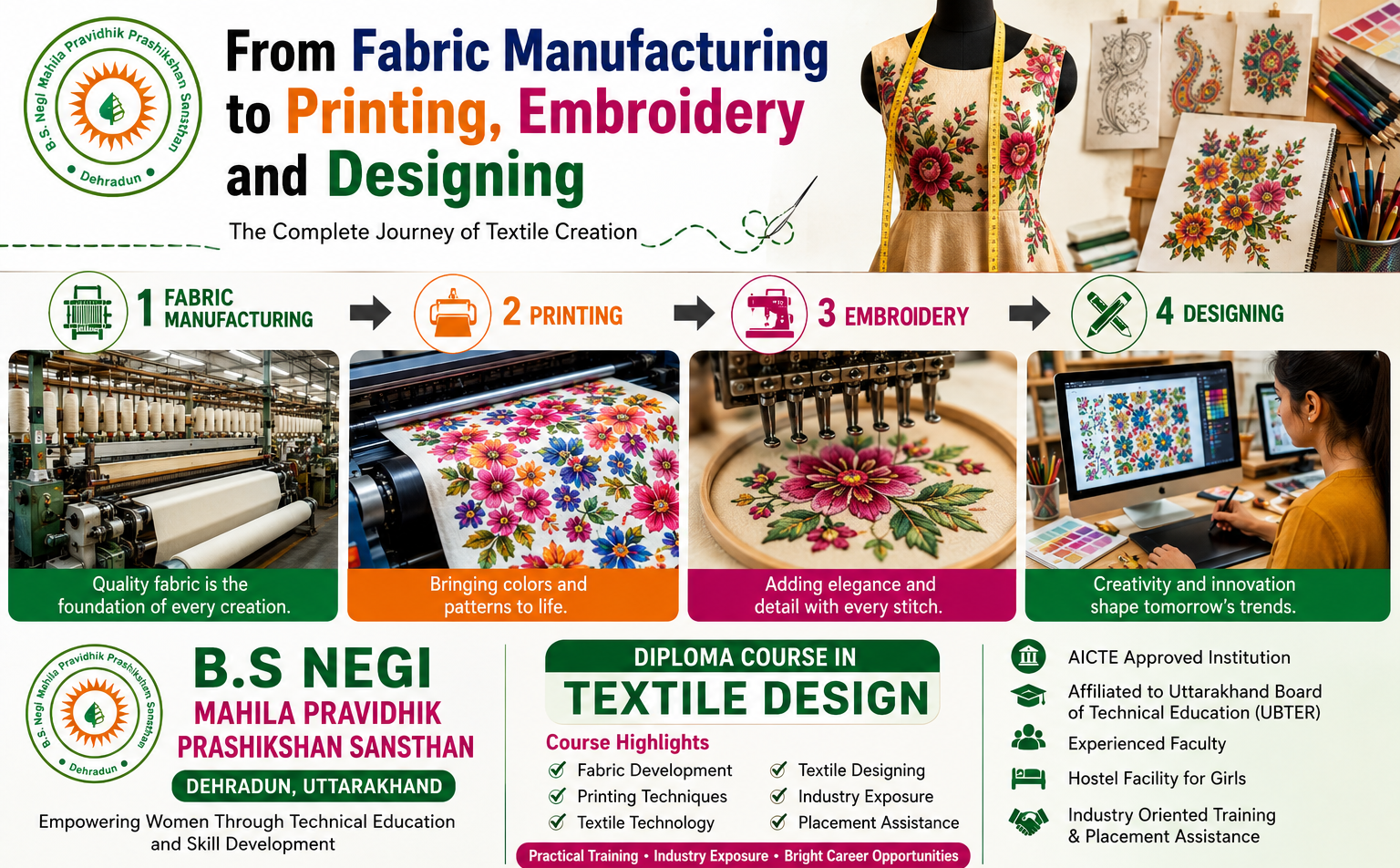
Students interested in building a career in textile design can pursue professional diploma courses from institutions such as B.S Negi Mahila Pravidhik Prashikshan Sansthan. The institute offers a Diploma in Textile Design with practical training, industry exposure, and placement assistance
Institute Highlights
B.S Negi Mahila Pravidhik Prashikshan Sansthan provides:
- Experienced faculty
- Placement assistance
- Hostel facilities for girls
- Industry-oriented diploma programs
- Technical education for women in Uttarakhand
Conclusion
The journey from fabric manufacturing to printing, embroidery, and textile designing reflects the perfect blend of creativity, craftsmanship, and technology. Every stage contributes to producing high-quality fabrics and fashionable garments used worldwide.
For students passionate about creativity and fashion, textile design offers excellent career opportunities in garment manufacturing, fashion designing, printing, embroidery, and textile production industries. Institutions like B.S Negi Mahila Pravidhik Prashikshan Sansthan are helping students build successful careers by offering professional Diploma Courses in Textile Design with practical and industry-focused training.